Human Reproduction Complete Solutions
Hey Lucky! Human Reproduction is easily one of the most high-weightage and fascinating chapters in Class 12 Biology. Is chapter mein hum male and female reproductive systems, gametogenesis, menstrual cycle, aur embryonic development ko practically samjhenge. Boards ho ya NEET 2026, yeh chapter solid marks carry karta hai. Let's break down these concepts simply so you can score full marks without mugging up!
Learning Objectives
After completing this chapter, students will be able to:
- Understand the anatomy of male and female reproductive systems.
- Explain the processes of Spermatogenesis and Oogenesis.
- Describe the phases and hormonal control of the Menstrual Cycle.
- Outline the events of fertilization, implantation, and embryonic development.
- Understand the mechanisms of pregnancy, parturition (childbirth), and lactation.
Key Concepts & Definitions
- Gametogenesis: The process of formation of gametes (sperms in males and ovum in females) in the primary sex organs.
- Insemination: The transfer of sperms into the female genital tract.
- Fertilization: The fusion of male and female gametes to form a diploid zygote.
- Implantation: The attachment of the blastocyst to the uterine wall (endometrium).
- Gestation: The period of embryonic development inside the womb (pregnancy).
- Parturition: The process of delivery of the fully developed fetus (childbirth).
- Placenta: The structural and functional unit between the developing embryo (fetus) and maternal body, providing oxygen and nutrients.
Full NCERT Solutions (Step-by-Step)
Here are the complete, step-by-step Updated NCERT Solutions for CBSE Class 12 Biology Chapter 3.
Question 1: Fill in the blanks.
(a) Humans reproduce sexually.
(b) Humans are viviparous.
(c) Fertilization is internal in humans.
(d) Male and female gametes are haploid.
(e) Zygote is diploid.
(f) The process of release of ovum from a mature follicle is called ovulation.
(g) Ovulation is induced by a hormone called Luteinizing Hormone (LH).
(h) The fusion of male and female gametes is called fertilization.
(i) Fertilization takes place in the ampullary region of the fallopian tube.
(j) Zygote divides to form blastocyst which is implanted in uterus.
(k) The structure which provides vascular connection between fetus and uterus is called placenta.
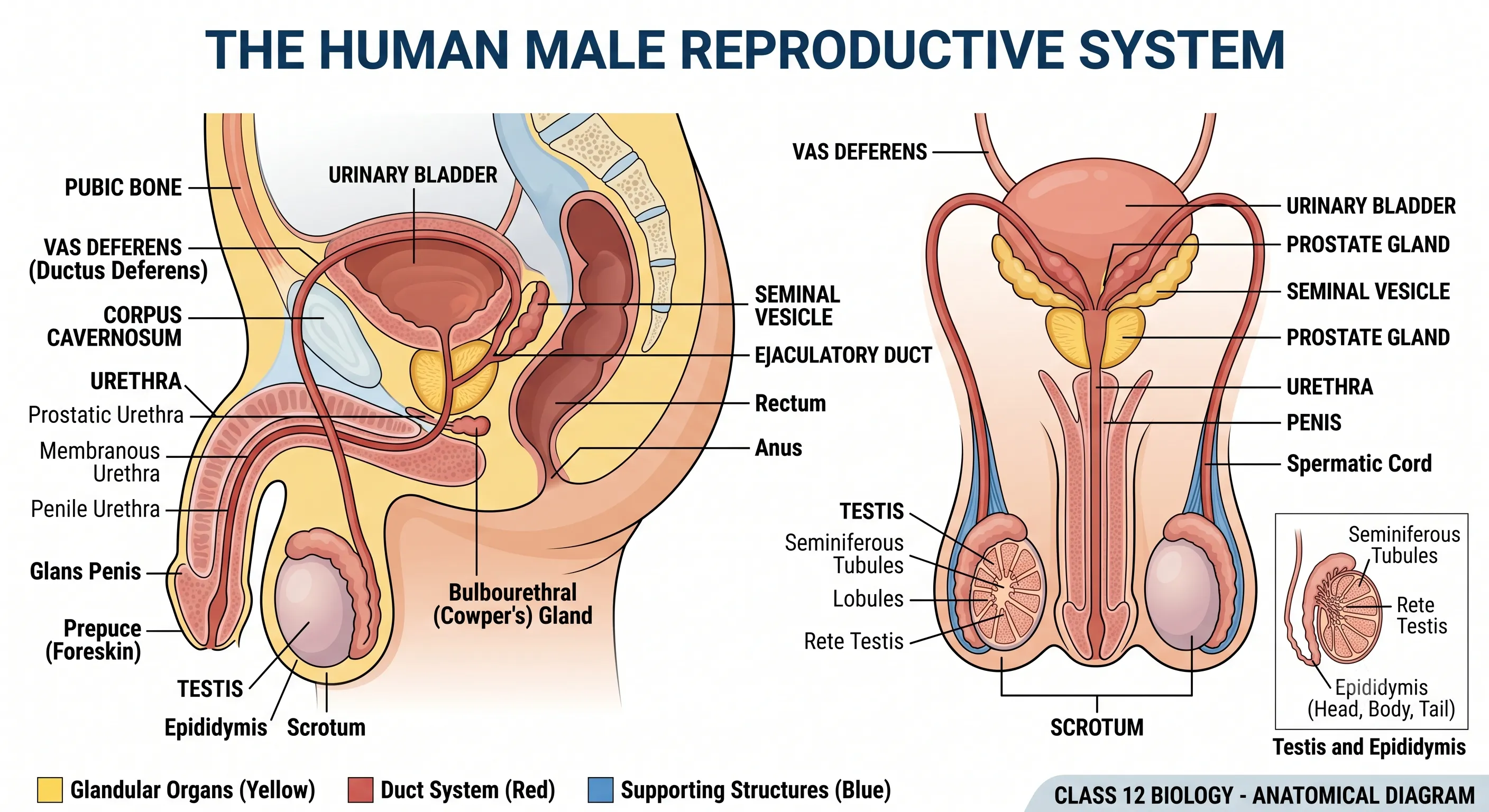
Question 2: Draw a labeled diagram of male reproductive system.
Step 1: Focus areas. Always practice drawing the sagittal section of the male pelvis.
Step 2: Key labels to include. Testis, Epididymis, Vas deferens, Seminal vesicle, Prostate gland, Bulbourethral gland, Urethra, Penis, Foreskin, Glans penis.
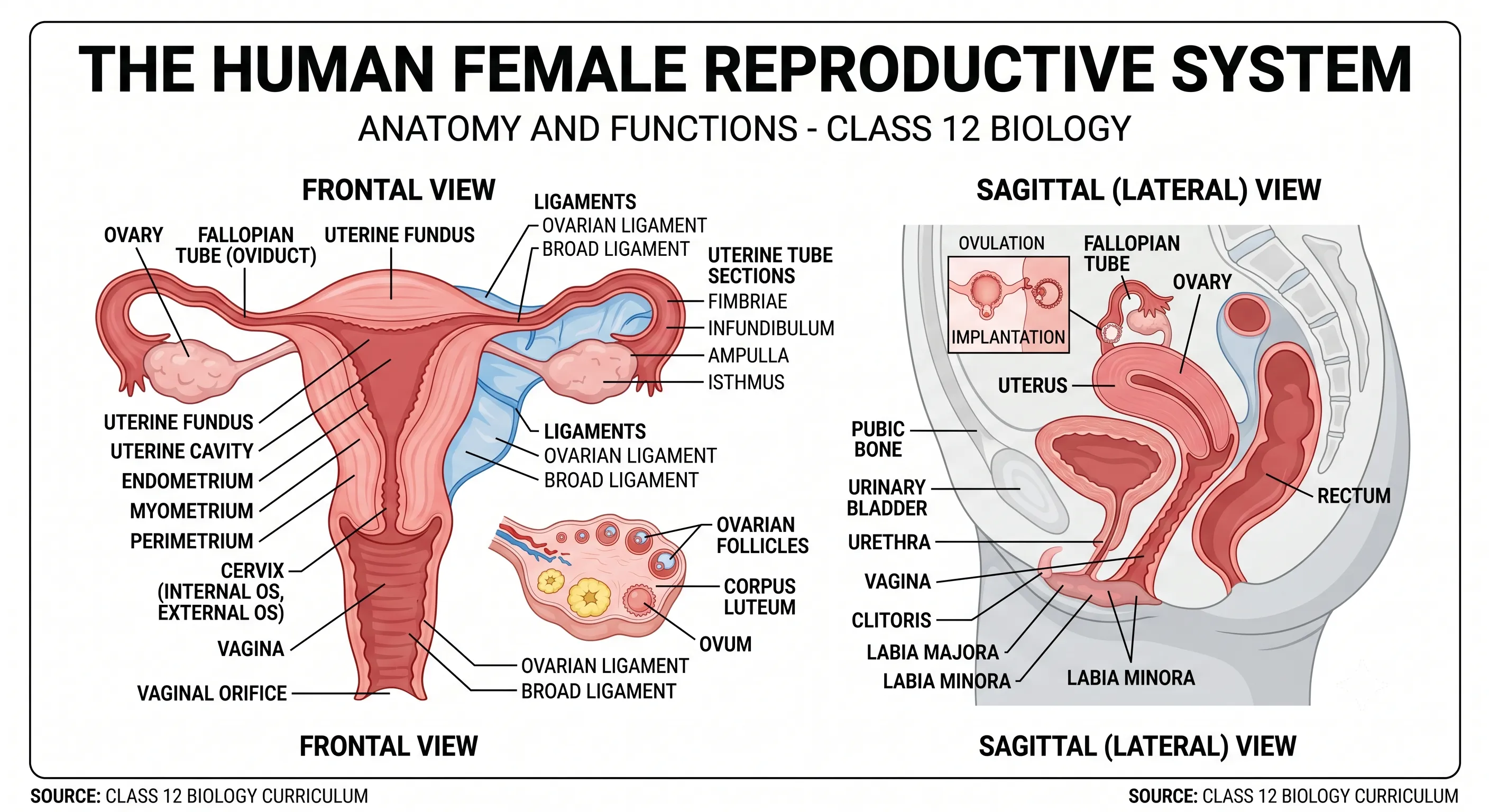
Question 3: Draw a labeled diagram of female reproductive system.
Step 1: Key labels to include. Ovary, Fallopian tube (Infundibulum, Ampulla, Isthmus), Fimbriae, Uterus (Fundus, Body, Cervix), Endometrium, Myometrium, Perimetrium, Vagina.
Question 4: Write two major functions each of testis and ovary.
Step 1: Functions of Testis.
1. Spermatogenesis: Production of male gametes (sperms) within the seminiferous tubules.
2. Hormone Secretion: Leydig cells secrete male sex hormones (androgens, mainly testosterone).
Step 2: Functions of Ovary.
1. Oogenesis: Production of the female gamete (ovum).
2. Hormone Secretion: Secretion of female sex hormones (estrogen and progesterone).
Question 5: Describe the structure of a seminiferous tubule.
Step 1: Basic Structure. Seminiferous tubules are highly coiled structures present inside the testicular lobules where sperms are produced.
Step 2: Internal lining. Each tubule is lined on its inside by two types of cells:
- Male germ cells (Spermatogonia): These undergo meiotic divisions to finally form sperms.
- Sertoli cells: These provide nutrition to the developing germ cells.
Step 3: External region. The region outside the tubules contains blood vessels and interstitial cells (Leydig cells) which secrete androgens.
Question 6: What is spermatogenesis? Briefly describe the process.
Step 1: Definition. Spermatogenesis is the process of formation of haploid microscopic and functional sperms from diploid spermatogonia in the testis.
Step 2: Multiplication Phase. Spermatogonia (2n) multiply by mitosis to increase in number.
Step 3: Growth Phase. Some spermatogonia grow and become Primary Spermatocytes (2n).
Step 4: Maturation Phase. Primary spermatocytes undergo the first meiotic division to form two haploid Secondary Spermatocytes (n). These undergo the second meiotic division to form four haploid Spermatids (n).
Step 5: Spermiogenesis. Spermatids transform into mature spermatozoa (sperms).
Question 7: Name the hormones involved in regulation of spermatogenesis.
Step 1: Key Hormones. Spermatogenesis is regulated by four main hormones:
1. GnRH (Gonadotropin Releasing Hormone): Secreted by the hypothalamus, stimulates the anterior pituitary.
2. LH (Luteinizing Hormone): Stimulates Leydig cells to synthesize and secrete androgens.
3. FSH (Follicle Stimulating Hormone): Stimulates Sertoli cells to secrete factors that help in spermiogenesis.
4. Androgens (Testosterone): Stimulate the process of spermatogenesis.
Question 8: Define spermiogenesis and spermiation.
Step 1: Spermiogenesis. The process of transformation of non-motile, round spermatids into active, motile spermatozoa (sperms).
Step 2: Spermiation. The process of release of mature sperms from the Sertoli cells into the lumen of the seminiferous tubules.
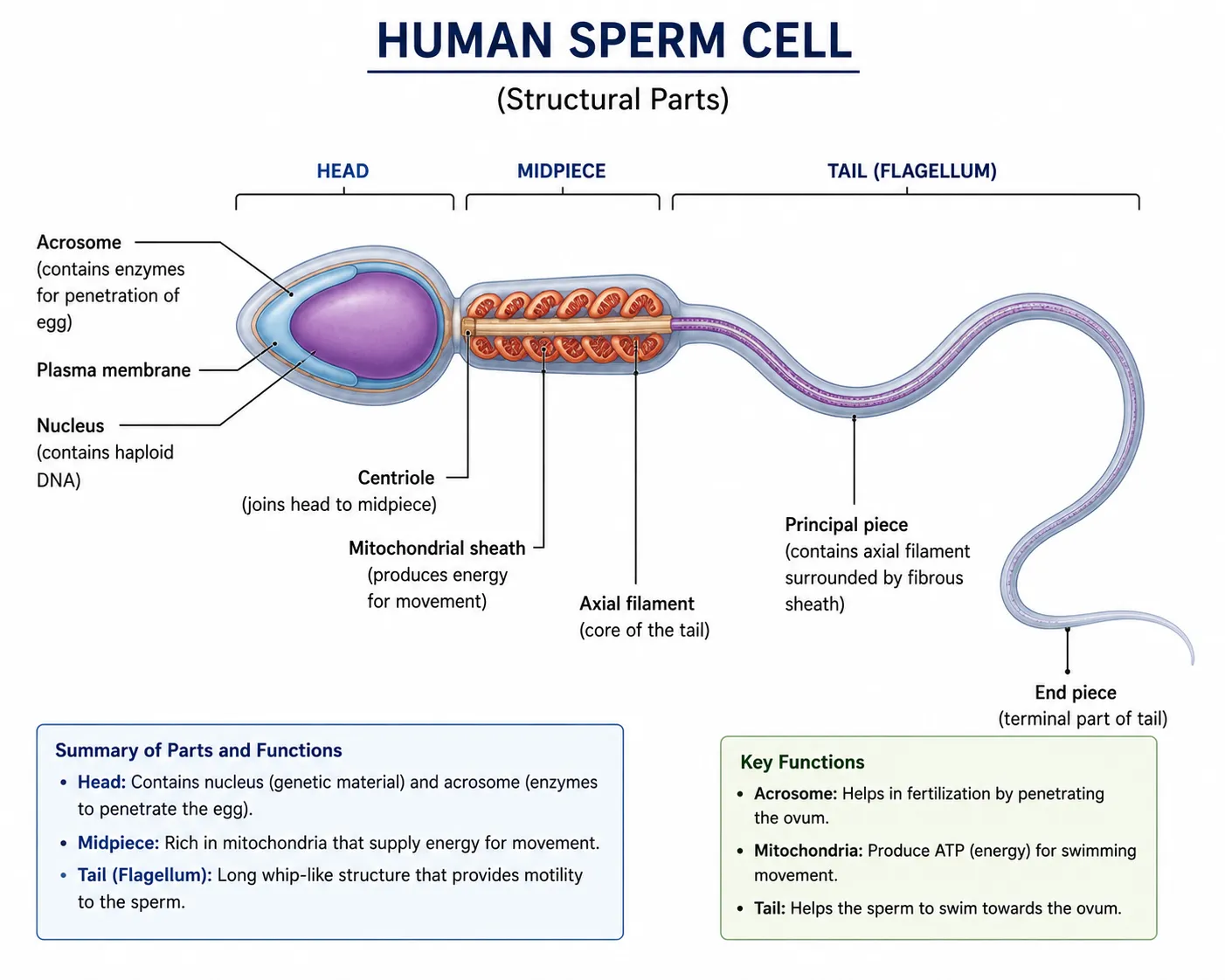
Question 9: Draw a labeled diagram of sperm.
Step 1: Key labels. Head, Acrosome, Nucleus, Neck, Middle piece (containing mitochondria), Tail.
Question 10: What are the major components of seminal plasma?
Step 1: Origin. Seminal plasma is the fluid secreted by the male accessory glands (seminal vesicles, prostate, and bulbourethral glands).
Step 2: Components. Its major components are:
- Fructose (for energy)
- Calcium
- Certain enzymes
Question 11: What are the major functions of male accessory ducts and glands?
Step 1: Accessory Ducts. (Rete testis, vasa efferentia, epididymis, vas deferens): They store and transport the sperms from the testis to the outside through the urethra.
Step 2: Accessory Glands. (Seminal vesicles, prostate, bulbourethral glands): They secrete seminal plasma which provides nutrition, motility, and a fluid medium for the sperms. Bulbourethral gland secretions also help in the lubrication of the penis.
Question 12: What is oogenesis? Give a brief account of oogenesis.
Step 1: Definition. Oogenesis is the process of formation of a mature female gamete (ovum). Unlike spermatogenesis, it begins during embryonic development.
Step 2: Embryonic Phase. Oogonia (2n) multiply in the fetal ovary and enter Prophase-I of meiosis to form Primary Oocytes, which get arrested at this stage.
Step 3: Puberty Phase. At puberty, primary oocytes resume meiosis-I to form a large Secondary Oocyte (n) and a tiny first polar body.
Step 4: Ovulation & Fertilization. The secondary oocyte is released during ovulation. Meiosis-II is completed only if a sperm enters the oocyte, resulting in a mature Ovum (ootid) and a second polar body.
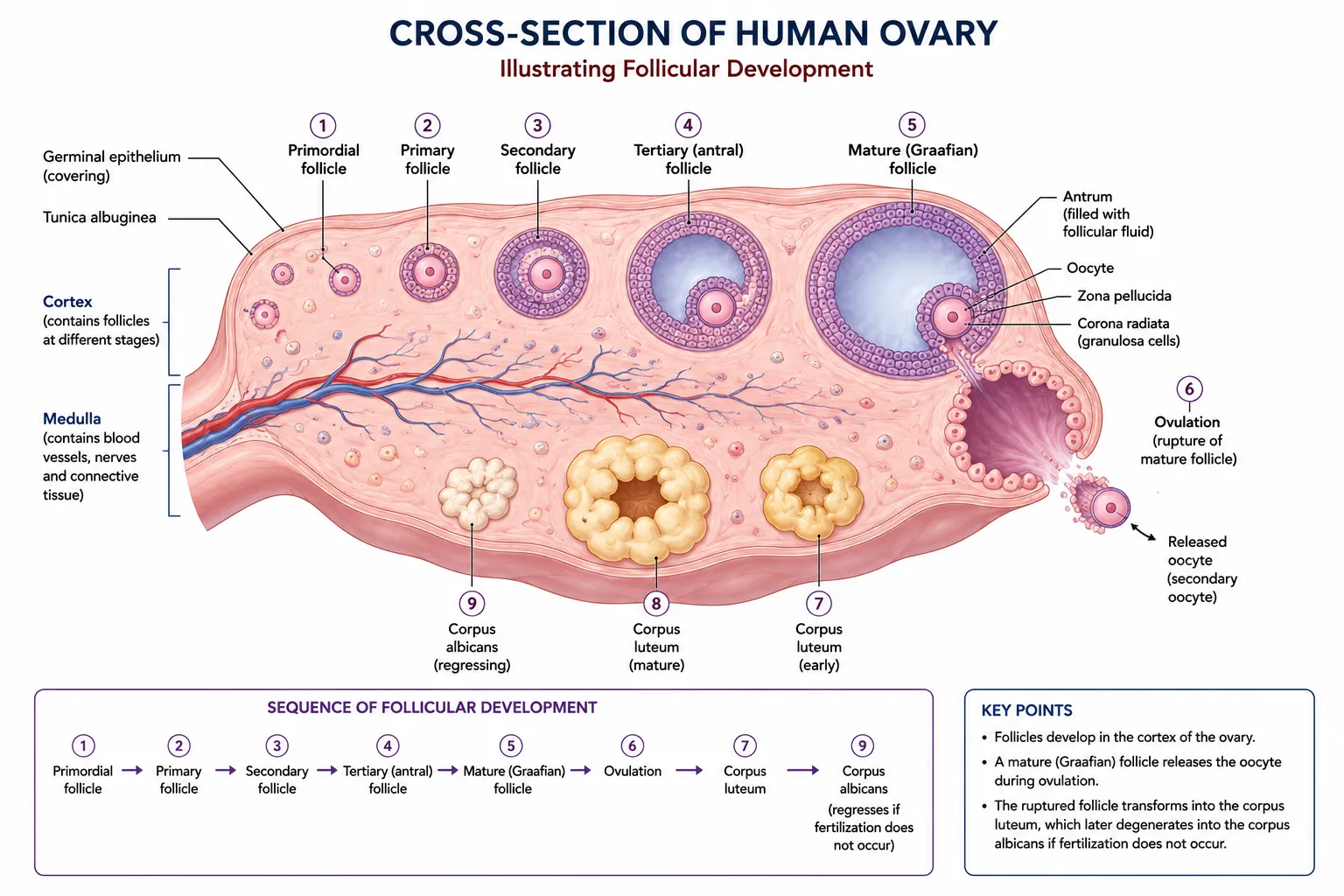
Question 13: Draw a labeled diagram of a section through ovary.
Step 1: Key labels. Blood vessels, Primary follicle, Secondary follicle, Tertiary follicle, Graafian follicle, Ovum, Corpus luteum.
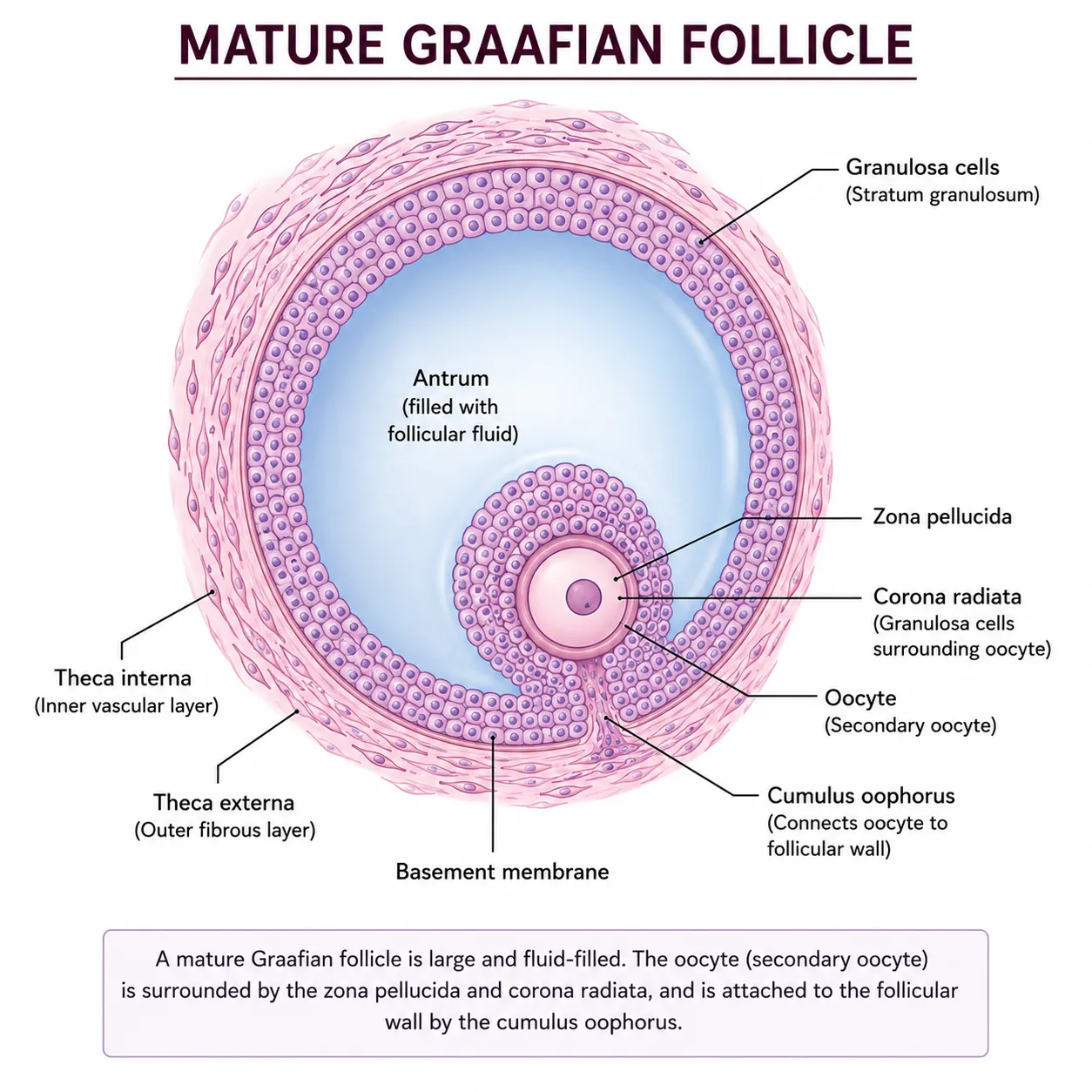
Question 14: Draw a labeled diagram of a Graafian follicle.
Step 1: Key labels. Theca externa, Theca interna, Antrum (fluid-filled cavity), Membrana granulosa, Corona radiata, Zona pellucida, Secondary oocyte.
Question 15: Name the functions of the following: (a) Corpus luteum (b) Endometrium (c) Acrosome (d) Sperm tail (e) Fimbriae
Step 1: (a) Corpus luteum. Secretes large amounts of progesterone, which is essential for the maintenance of the endometrium for implantation.
Step 2: (b) Endometrium. Inner lining of the uterus where the blastocyst implants. It undergoes cyclical changes during the menstrual cycle.
Step 3: (c) Acrosome. Contains hydrolytic enzymes that help the sperm penetrate the ovum during fertilization.
Step 4: (d) Sperm tail. Facilitates sperm motility required to swim through the female reproductive tract to reach the egg.
Step 5: (e) Fimbriae. Finger-like projections at the edge of the fallopian tube that help collect the ovum after ovulation.
Question 16: Identify True/False statements.
(a) Androgens are produced by Sertoli cells. → False (Produced by Leydig cells)
(b) Spermatozoa get nutrition from Sertoli cells. → True
(c) Leydig cells are found in ovary. → False (Found in testis)
(d) Leydig cells synthesise androgens. → True
(e) Oogenesis takes place in corpus luteum. → False (Takes place in Graafian follicle/ovary)
(f) Menstrual cycle ceases during pregnancy. → True
(g) Presence or absence of hymen is not a reliable indicator of virginity or sexual experience. → True
Question 17: What is menstrual cycle? Which hormones regulate menstrual cycle?
Step 1: Definition. The reproductive cycle in female primates (including humans) is called the menstrual cycle. It lasts for about 28/29 days and involves changes in the ovary and uterus.
Step 2: Hormonal Regulation.
- Pituitary hormones: LH (Luteinizing Hormone) and FSH (Follicle Stimulating Hormone).
- Ovarian hormones: Estrogen and Progesterone.
Question 18: What is parturition? Which hormones are involved in induction of parturition?
Step 1: Definition. Parturition is the vigorous contraction of the uterus at the end of pregnancy, causing the delivery/expulsion of the fetus.
Step 2: Hormones involved.
- Oxytocin: Causes strong uterine muscle contractions.
- Relaxin: Relaxes the pelvic ligaments.
- Cortisol and estrogens also play a supportive role.
Question 19: In our society the women are often blamed for giving birth to daughters. Can you explain why this is not correct?
Step 1: Genetic facts. This is biologically incorrect because the sex of the baby is determined by the father's sperm, not the mother's ovum.
Step 2: Chromosome contribution. Females have XX chromosomes and produce only one type of ovum (22+X). Males have XY chromosomes and produce two types of sperms: (22+X) and (22+Y).
Step 3: Conclusion. If an X-bearing sperm fertilizes the egg, it's a girl (XX). If a Y-bearing sperm fertilizes the egg, it's a boy (XY). The father provides the deciding chromosome!
Question 20: How many eggs are released by a human ovary in a month? How many eggs do you think would have been released if the mother gave birth to identical twins? Would your answer change if the twins born were fraternal?
Step 1: Normal release. Usually, one egg is released by a human ovary in a month.
Step 2: Identical Twins. Only one egg is released and fertilized by one sperm. The resulting zygote splits into two embryos.
Step 3: Fraternal Twins. Yes, the answer changes. Two eggs are released and fertilized by two different sperms.
Question 21: How many eggs do you think were released by the ovary of a female dog which gave birth to 6 puppies?
Step 1: Logic. Six eggs must have been released by the ovary. Dogs are multiparous animals (they release multiple eggs in a cycle).
Step 2: Fertilization. Each egg is fertilized by a separate sperm to produce 6 distinct puppies.
EXTRA IMPORTANT QUESTIONS (BOARD STYLE)
Yahan kuch most-expected Board Exam Questions 2026 hain jo aapko zaroor practice karne chahiye.
Multiple Choice Questions (MCQs)
1. The hormone responsible for ovulation is:
(a) FSH
(b) Estrogen
(c) LH
(d) Progesterone
Step 1: Logic. (c) LH (Luteinizing hormone surge causes ovulation).
2. Which part of the sperm provides energy for its movement?
(a) Head
(b) Tail
(c) Middle piece
(d) Acrosome
Step 1: Logic. (c) Middle piece (contains numerous mitochondria).
3. Implantation takes place in which layer of the uterus?
(a) Myometrium
(b) Endometrium
(c) Perimetrium
(d) Cervix
Step 1: Logic. (b) Endometrium.
4. The first movements of the fetus and appearance of hair on the head are usually observed during which month of pregnancy?
(a) Third month
(b) Fifth month
(c) Seventh month
(d) First month
Step 1: Logic. (b) Fifth month.
Short Answer Questions (2-3 Marks)
5. What is the role of the placenta during pregnancy?
Step 1: Supply and removal. Placenta acts as an endocrine tissue and supplies oxygen and nutrients to the embryo. It also removes carbon dioxide and excretory waste produced by the embryo.
Step 2: Hormones. It secretes hormones like hCG, hPL, estrogens, and progestogens.
6. Define colostrum. Why is it highly recommended by doctors?
Step 1: Definition. The milk produced during the initial few days of lactation is called colostrum.
Step 2: Significance. It is highly recommended because it contains several antibodies (especially IgA) which provide passive immunity to the newborn baby.
7. Differentiate between Morula and Blastocyst.
Step 1: Morula. An 8 to 16-celled solid spherical stage of the embryo.
Step 2: Blastocyst. A hollow structure with an outer layer of cells (trophoblast) and an inner cell mass. It implants into the uterus.
8. Why are testes situated outside the abdominal cavity?
Step 1: Temperature regulation. Testes are located in the scrotum because spermatogenesis requires a temperature slightly lower (2-2.5°C) than the normal internal body temperature.
Long Answer Questions (5 Marks)
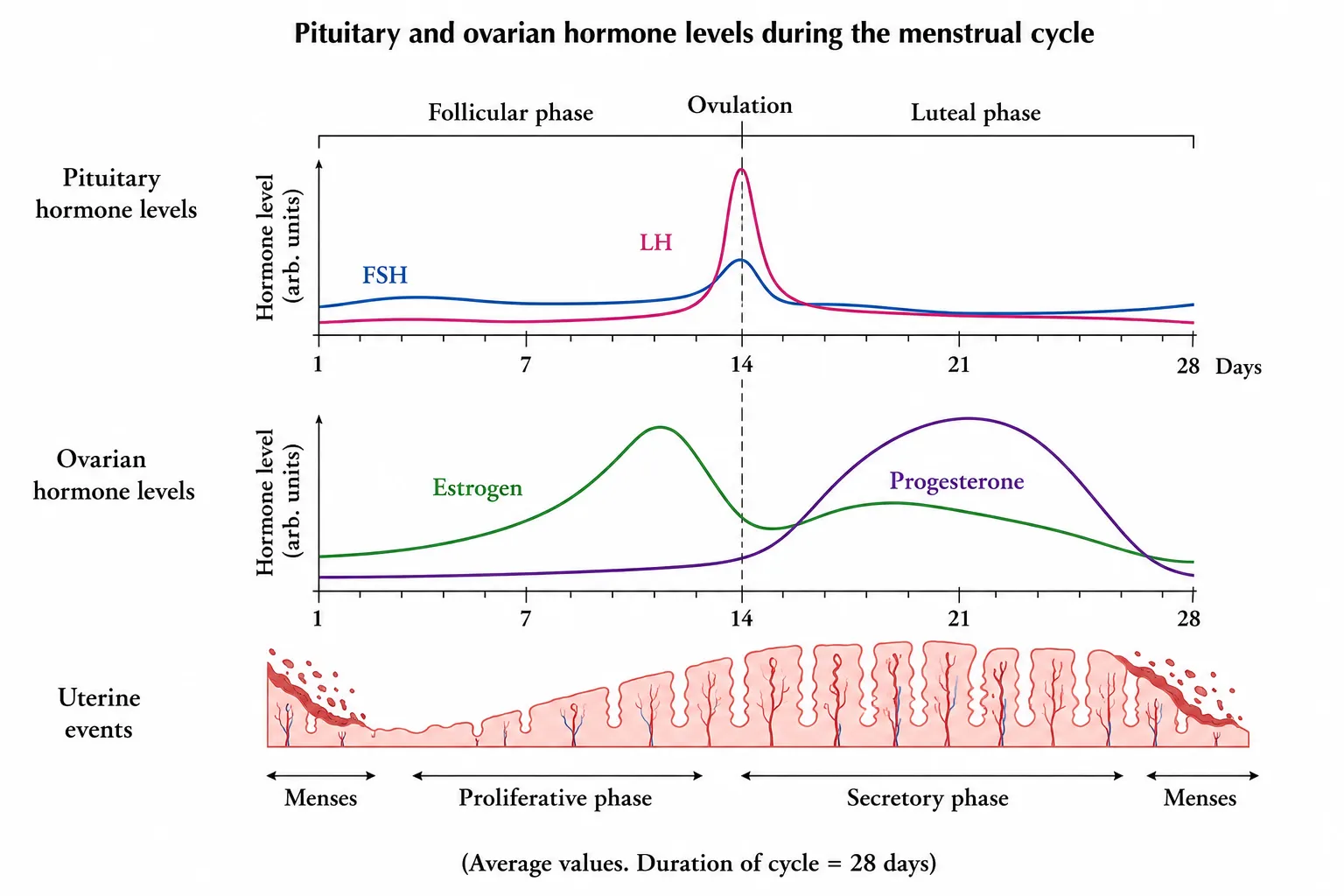
9. Explain the phases of the menstrual cycle with the help of hormonal changes.
Step 1: Menstrual Phase (Days 1-5). Breakdown of endometrial lining due to low levels of estrogen and progesterone.
Step 2: Follicular/Proliferative Phase (Days 6-13). Primary follicles grow into Graafian follicles. Secretion of LH, FSH, and Estrogen gradually increases, rebuilding the endometrium.
Step 3: Ovulatory Phase (Day 14). LH surge induces rupture of Graafian follicle and release of the ovum.
Step 4: Luteal/Secretory Phase (Days 15-28). Ruptured follicle becomes corpus luteum, secreting high levels of progesterone to maintain the endometrium for possible implantation.
10. Trace the path of sperm from the seminiferous tubules to the outside of the body.
Step 1: Pathway. Seminiferous tubules → Rete testis → Vasa efferentia → Epididymis → Vas deferens → Ejaculatory duct → Urethra → Urethral meatus.
11. Describe the events of fertilization and implantation in humans.
Step 1: Fertilization. Sperms swim through the cervix and uterus to reach the ampulla. One sperm contacts the zona pellucida of the ovum, inducing changes that block other sperms. The acrosome releases enzymes allowing the sperm nucleus to enter the ovum, forming a diploid zygote.
Step 2: Implantation. The zygote undergoes cleavage to form a blastocyst. The trophoblast layer attaches to the endometrium, and uterine cells rapidly divide to cover the blastocyst. This embedding is called implantation.
Case-Based / Passage-Based Question
Read the passage and answer the questions (12-13):
A young pregnant woman visits her doctor. The doctor checks the ultrasound and informs her that the fetus has developed a heart. The doctor also explains that a specialized tissue is currently supplying oxygen and nutrients to the baby.
12. At what stage of pregnancy is the first sign of a growing fetus (heart development) noticed?
Step 1: Identification. After one month of pregnancy.
13. Name the "specialized tissue" mentioned by the doctor and list two hormones it secretes exclusively during pregnancy.
Step 1: Tissue. The tissue is the Placenta.
Step 2: Hormones. Hormones secreted exclusively during pregnancy are hCG (Human Chorionic Gonadotropin) and hPL (Human Placental Lactogen).
Assertion-Reason Questions
Directions: (A) Both A and R are true and R is the correct explanation of A. (B) Both A and R are true but R is not the correct explanation of A. (C) A is true but R is false. (D) A is false but R is true.
14. Assertion (A): The sex of the human baby is determined by the father.
Reason (R): Male produces two types of gametes, 50% carrying X chromosome and 50% carrying Y chromosome.
Step 1: Verification. (A) Both A and R are true, and R correctly explains A.
15. Assertion (A): In humans, the ovum is released from the ovary in the secondary oocyte stage.
Reason (R): The second meiotic division is completed only when the sperm penetrates the ovum.
Step 1: Verification. (A) Both A and R are true, and R correctly explains A.
Common Mistakes Students Make
- Spermatogenesis vs. Spermiogenesis vs. Spermiation: Names sound similar! Genesis = formation of sperms. Spermiogenesis = transformation of shape. Spermiation = release from Sertoli cells.
- Confusing FSH and LH: Remember, LH acts on Leydig cells. FSH acts on Sertoli cells.
- Placenta vs. Umbilical Cord: Placenta is the actual connection tissue on the uterine wall. The umbilical cord is just the biological "pipe" connecting the fetus to the placenta.
- Days of Menstrual Cycle: The cycle is 28 days long, but ovulation happens strictly around Day 14, not at the end!
Exam Preparation Tips
- Master the Diagrams: Biology Class 12 Boards are highly visual. Practice drawing the male/female systems, sperm structure, and the ovary section at least 3 times. Don't forget labeling!
- Use Flowcharts: Memorize Gametogenesis (Spermatogenesis and Oogenesis) using vertical flowcharts showing chromosome numbers (2n → n).
- Answer Writing Strategy: Bullet points are your best friend. Highlight keywords like Corpus Luteum, Zona Pellucida, Trophoblast.
- Last-Minute Focus: Focus heavily on the hormonal regulation of the menstrual cycle and the exact functions of the placenta.
Frequently Asked Questions (FAQs)
Is Chapter 3 Human Reproduction important for Class 12 Boards?
Where can I download the updated NCERT PDF for Biology Chapter 3?
What is the function of the corpus luteum?
Which questions are most important from this chapter?
Why is colostrum important for a newborn?
Conclusion:
Yaar Lucky, aur sabhi students, Human Reproduction might look lengthy, but it's super logical once you visualize the processes. Revise the flowcharts regularly, draw the diagrams without looking at the book, and strictly practice PYQs. You don't need to memorize long paragraphs—just understand the "how" and "why." Download your notes, keep your basics clear, and you'll easily ace this chapter in the 2026 Board exams!